Interview · 10 November 2026
It takes a strong stomach and the right kind of nerve
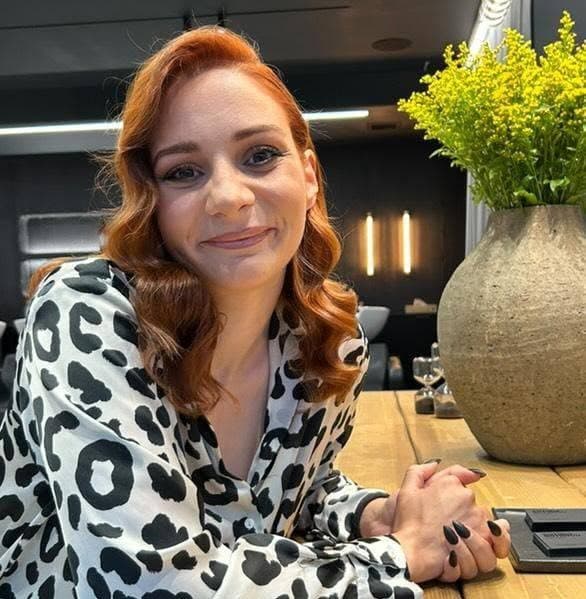
Alexandra Spanou
 Interview by Eleni Lazaridou
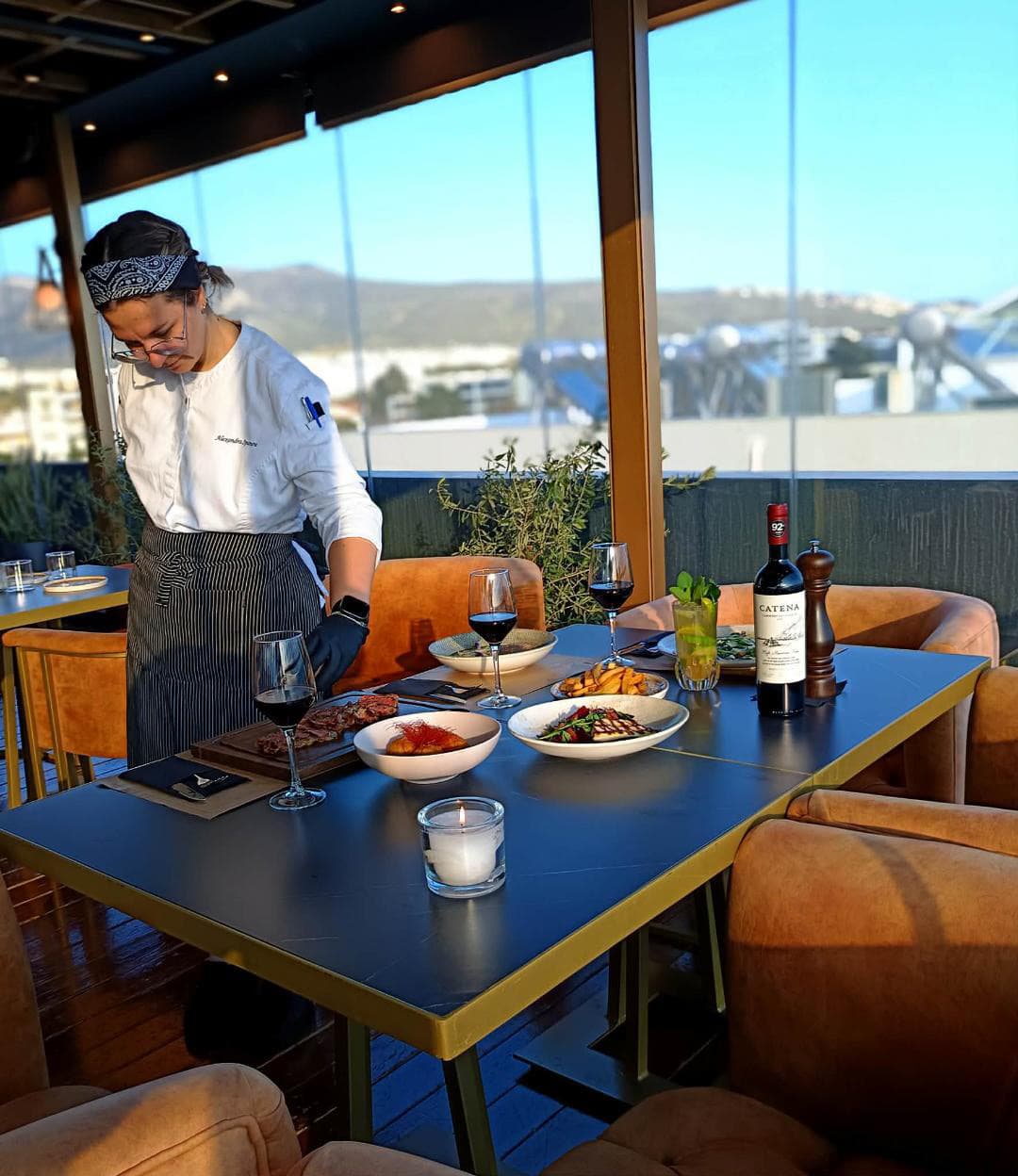
From her grandmother’s kitchen and her godmother’s village kafeneio to the post of sous chef, and from there to the column “Behind the Pass”. 5 Stigmes welcomed Alexandra Spanou and asked her 5 questions about her first steps in cooking, the decision to make it her profession, her path through professional kitchens, her column on Medium, and what it takes for a woman to hold her own in a professional kitchen.
Alexandra Spanou has worked in professional cooking for 14 years and today holds the post of sous chef. Working with different teams and kitchens, she has gained valuable experience and knowledge, which she loves to share. She also writes the column “Behind the Pass” («Πίσω απ’ το πάσο») on Medium, where she sheds light on the less visible sides of everyday life in a professional kitchen.
Question 1
How did you first come into contact with cooking? Was it something you knew from a young age that you wanted to pursue professionally and that would fulfil you, or did you discover it gradually through your experiences?
Alexandra
My first contact with cooking began at my grandmother’s house, and also at the house of my godmother, who lived in the countryside and ran a kafeneio, a village coffee house. Every long weekend I was in the kitchen, taking part in a daily life where food was inseparable from hospitality and sharing. Through those moments I met new people; I offered, I looked after them, and I shared with them the joy of food. I think that is where my love was born for combining travel with giving through cooking: discovering new places, meeting people and offering them something through what I create.
Question 2
When the time came to decide which professional path to follow, how did you end up in cooking? Even though it was something you loved, had you thought about whether you could make a living from it and turn it into a stable career? How did you finally make that decision?
Alexandra
I have always been interested in human psychology and in the way people work. I wanted to be able to look after others, to offer them something and make them feel better. I realised that through cooking I could bring these interests together. Being present for someone, offering them a delicious meal and your presence, may seem simple, but it is something deeply meaningful.
When the time came to decide what I wanted to do professionally, I felt that cooking was the choice that best combined the things I cared about. I started with intensive cooking courses and soon I was constantly looking for new knowledge and techniques. I watched videos on YouTube, read books and articles, and wanted to soak up as much information as I could, like a sponge.
Later, through internships and seasonal jobs, I managed to combine two things I loved: cooking and travel. Every new place and every different kitchen became one more chance for me to learn, grow and meet new people. At the same time, I kept attending seminars and investing in my training, always looking for ways to keep developing.
Question 3
How did your career develop through your different collaborations and experiences in kitchens? How did you reach the post of sous chef?
Alexandra
Over the 14 years of my career and through my different collaborations, I had the chance to work with many teams and to get to know different ways a professional kitchen can run. After a lot of effort and persistence, I reached the post of sous chef, something I never imagined when I was starting out.
Along the way, I was also given the chance to take an active part in seminars alongside chefs and colleagues. This teaching side interested me especially, because I could pass on what I know and explain to other people not only how something is done, but also why it is done in a particular way.
Through this process I understood how important it is to pass on the knowledge behind the kitchen too, beyond the image of the plate that reaches the table.
Question 4
How did the idea for your column “Behind the Pass” come about? What made you want to share with people what happens in the kitchen, beyond the image of the plate that reaches the table?
Alexandra
Over time I realised that there was a great deal of information and experience from everyday kitchen life that never reached the public. I was always keeping notes, and I noticed the same questions coming up again and again: why a dish is running late, why one table is served before another, what really happens during a shift.
I wanted to show this side of the restaurant world, which usually stays out of sight. At the same time, I was looking for a way to stay in the field I love and to express myself creatively, even if at some point circumstances didn’t allow me to work in the kitchen every day.
That is how I discovered Medium and started the column “Behind the Pass”. I usually write once a week, every Monday, and often the starting point for a piece is something that happened during a shift. I want my pieces to be direct, short and realistic, like small episodes that capture the reality behind the pass.
Question 5
What do you consider the biggest challenges you have faced as a woman in professional kitchens? What advice would you give to someone who is just starting out on their own path in cooking?
Alexandra
A woman’s path in the professional kitchen isn’t easy. It often takes more effort for her work to be recognised and to prove that she can hold her own in such a demanding environment. I have faced difficult moments, especially in my first steps. It takes a strong stomach, patience, stamina and, as I like to say, the right kind of nerve to stand up for yourself and earn other people’s respect.
To someone who wants to follow this path I would say: keep your ears open, observe, have the appetite and the will to learn, and never stop asking questions, even if you have to ask the same thing many times. It is a hard journey, but it can reward you with unique experiences and people who will shape you.
I also think it is important not to bottle up whatever is weighing on us, to filter situations and not to rush to conclusions. Above all, we must not forget where we started, which people we worked with and who helped us along the way. However far we go professionally, we must not forget the experiences and the people who helped us get this far.